• RNA polymerase II transcription coactivator activity • sequence-specific DNA binding • DNA binding • RNA polymerase II transcription corepressor activity • transcription factor activity, sequence-specific DNA binding • zinc ion binding • chromatin binding • metal ion binding • protein binding • poly-glutamine tract binding • RNA polymerase II transcription factor activity, sequence-specific DNA binding • transcription coactivator activity • transcription corepressor activity • RNA polymerase II transcription factor binding
Cellular component
• histone deacetylase complex • cell nucleus
Biological process
• chromatin remodeling • regulation of transcription, DNA-templated • dendrite morphogenesis • cerebellar Purkinje cell layer maturation • negative regulation of transcription from RNA polymerase II promoter • transcription, DNA-templated • cerebellum development • branching morphogenesis of a nerve • cerebellar granule cell precursor proliferation • multicellular organism development • radial glia guided migration of Purkinje cell • positive regulation of transcription from RNA polymerase II promoter • NLS-bearing protein import into nucleus • transcription from RNA polymerase II promoter • negative regulation of nucleic acid-templated transcription • regulation of transcription from RNA polymerase II promoter • positive regulation of nucleic acid-templated transcription
Sources:Amigo / QuickGO
Orthologs
Species
Human
Mouse
Entrez
473
68703
Ensembl
ENSG00000142599
ENSMUSG00000039852
UniProt
Q9P2R6
Q80TZ9
RefSeq (mRNA)
NM_001042681 NM_001042682 NM_012102
NM_001085492
RefSeq (protein)
NP_001036146 NP_001036147 NP_036234
NP_001078961
Location (UCSC)
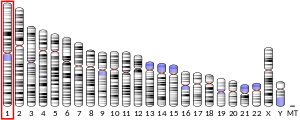
Chr 1: 8.35 – 8.82 Mb
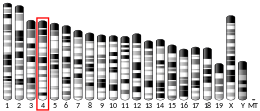
Chr 4: 150.28 – 150.62 Mb
PubMed search
[3]
[4]
Wikidata
View/Edit Human
View/Edit Mouse
Arginine-glutamic acid dipeptide repeats protein is a protein that in humans is encoded by the RERE gene.[5][6][7]
Contents
1Function
2Interactions
3References
4Further reading
Function
This gene encodes a member of the atrophin family of arginine-glutamic acid (RE) dipeptide repeat-containing proteins. The encoded protein co-localizes with a transcription factor in the nucleus, and its overexpression triggers apoptosis. A similar protein in mouse associates with histone deacetylase and is thought to function as a transcriptional co-repressor during embryonic development. Recent reports also indicate that RERE and its Drosophila homolog associate with histone methyltransferases in regulating gene expression. Multiple transcript variants encoding different isoforms have been found for this gene.[7]
Interactions
RERE has been shown to interact with ATN1.[5]
References
^ abcGRCh38: Ensembl release 89: ENSG00000142599 - Ensembl, May 2017
^ abcGRCm38: Ensembl release 89: ENSMUSG00000039852 - Ensembl, May 2017
^ abYanagisawa H, Bundo M, Miyashita T, Okamura-Oho Y, Tadokoro K, Tokunaga K, Yamada M (May 2000). "Protein binding of a DRPLA family through arginine-glutamic acid dipeptide repeats is enhanced by extended polyglutamine". Human Molecular Genetics. 9 (9): 1433–42. doi:10.1093/hmg/9.9.1433. PMID 10814707.
^Amler LC, Bauer A, Corvi R, Dihlmann S, Praml C, Cavenee WK, Schwab M, Hampton GM (Mar 2000). "Identification and characterization of novel genes located at the t(1;15)(p36.2;q24) translocation breakpoint in the neuroblastoma cell line NGP". Genomics. 64 (2): 195–202. doi:10.1006/geno.1999.6097. PMID 10729226.
Wang L, Rajan H, Pitman JL, McKeown M, Tsai CC (Mar 2006). "Histone deacetylase-associating Atrophin proteins are nuclear receptor corepressors". Genes & Development. 20 (5): 525–30. doi:10.1101/gad.1393506. PMC 1410805. PMID 16481466.
Wang L, Charroux B, Kerridge S, Tsai CC (Jun 2008). "Atrophin recruits HDAC1/2 and G9a to modify histone H3K9 and to determine cell fates". EMBO Reports. 9 (6): 555–62. doi:10.1038/embor.2008.67. PMC 2427389. PMID 18451879.
Seki N, Ohira M, Nagase T, Ishikawa K, Miyajima N, Nakajima D, Nomura N, Ohara O (Oct 1997). "Characterization of cDNA clones in size-fractionated cDNA libraries from human brain". DNA Research. 4 (5): 345–9. doi:10.1093/dnares/4.5.345. PMID 9455484.
Waerner T, Gardellin P, Pfizenmaier K, Weith A, Kraut N (Apr 2001). "Human RERE is localized to nuclear promyelocytic leukemia oncogenic domains and enhances apoptosis". Cell Growth & Differentiation. 12 (4): 201–10. PMID 11331249.
Yi J, Kloeker S, Jensen CC, Bockholt S, Honda H, Hirai H, Beckerle MC (Mar 2002). "Members of the Zyxin family of LIM proteins interact with members of the p130Cas family of signal transducers". The Journal of Biological Chemistry. 277 (11): 9580–9. doi:10.1074/jbc.M106922200. PMID 11782456.
Wistow G, Bernstein SL, Wyatt MK, Behal A, Touchman JW, Bouffard G, Smith D, Peterson K (Jun 2002). "Expressed sequence tag analysis of adult human lens for the NEIBank Project: over 2000 non-redundant transcripts, novel genes and splice variants". Molecular Vision. 8: 171–84. PMID 12107413.
Tomarev SI, Wistow G, Raymond V, Dubois S, Malyukova I (Jun 2003). "Gene expression profile of the human trabecular meshwork: NEIBank sequence tag analysis". Investigative Ophthalmology & Visual Science. 44 (6): 2588–96. doi:10.1167/iovs.02-1099. PMID 12766061.
Zoltewicz JS, Stewart NJ, Leung R, Peterson AS (Jan 2004). "Atrophin 2 recruits histone deacetylase and is required for the function of multiple signaling centers during mouse embryogenesis". Development. 131 (1): 3–14. doi:10.1242/dev.00908. PMID 14645126.
Beausoleil SA, Jedrychowski M, Schwartz D, Elias JE, Villén J, Li J, Cohn MA, Cantley LC, Gygi SP (Aug 2004). "Large-scale characterization of HeLa cell nuclear phosphoproteins". Proceedings of the National Academy of Sciences of the United States of America. 101 (33): 12130–5. doi:10.1073/pnas.0404720101. PMC 514446. PMID 15302935.
Otsuki T, Ota T, Nishikawa T, Hayashi K, Suzuki Y, Yamamoto J, Wakamatsu A, Kimura K, Sakamoto K, Hatano N, Kawai Y, Ishii S, Saito K, Kojima S, Sugiyama T, Ono T, Okano K, Yoshikawa Y, Aotsuka S, Sasaki N, Hattori A, Okumura K, Nagai K, Sugano S, Isogai T (2007). "Signal sequence and keyword trap in silico for selection of full-length human cDNAs encoding secretion or membrane proteins from oligo-capped cDNA libraries". DNA Research. 12 (2): 117–26. doi:10.1093/dnares/12.2.117. PMID 16303743.
Kimura K, Wakamatsu A, Suzuki Y, Ota T, Nishikawa T, Yamashita R, Yamamoto J, Sekine M, Tsuritani K, Wakaguri H, Ishii S, Sugiyama T, Saito K, Isono Y, Irie R, Kushida N, Yoneyama T, Otsuka R, Kanda K, Yokoi T, Kondo H, Wagatsuma M, Murakawa K, Ishida S, Ishibashi T, Takahashi-Fujii A, Tanase T, Nagai K, Kikuchi H, Nakai K, Isogai T, Sugano S (Jan 2006). "Diversification of transcriptional modulation: large-scale identification and characterization of putative alternative promoters of human genes". Genome Research. 16 (1): 55–65. doi:10.1101/gr.4039406. PMC 1356129. PMID 16344560.
Lim J, Hao T, Shaw C, Patel AJ, Szabó G, Rual JF, Fisk CJ, Li N, Smolyar A, Hill DE, Barabási AL, Vidal M, Zoghbi HY (May 2006). "A protein-protein interaction network for human inherited ataxias and disorders of Purkinje cell degeneration". Cell. 125 (4): 801–14. doi:10.1016/j.cell.2006.03.032. PMID 16713569.
Olsen JV, Blagoev B, Gnad F, Macek B, Kumar C, Mortensen P, Mann M (Nov 2006). "Global, in vivo, and site-specific phosphorylation dynamics in signaling networks". Cell. 127 (3): 635–48. doi:10.1016/j.cell.2006.09.026. PMID 17081983.
This article on a gene on human chromosome 1 is a stub. You can help Wikipedia by expanding it.
Does every functor from Set to Set preserve products?
Why avoid shared user accounts?
What to look for when criticizing poetry?
Is a new Boolean field better than a null reference when a value can be meaningfully absent?
Why zero tolerance on nudity in space?
In Linux what happens if 1000 files in a directory are moved to another location while another 300 files were added to the source directory?
Why exactly do action photographers need high fps burst cameras?
Can we harness gravitational potential energy?
What sets the resolution of an analog resistive sensor?
How to make ice magic work from a scientific point of view?
...
Does fast page mode apply to ROM?
Overfitting and Underfitting
Why is working on the same position for more than 15 years not a red flag?
Why do neural networks need so many training examples to perform?
How should I handle players who ignore the session zero agreement?
How would one buy a used TIE Fighter or X-Wing?
It took me a lot of time to make this, pls like. (YouTube Comments #1)
Is there any differences between “gucken” and “schauen”?
Reference on complex cobordism
What makes the Forgotten Realms "forgotten"?
How to acknowledge an embarrassing job interview, now that I work d...
What are some ways of extending a description of a scenery?
Plausible reason for gold-digging ant
Why did Ylvis use "go" instead of "say" in phrases like "Dog goes 'woof'"?
Illustrator to chemdraw
Are all power cords made equal?
XOR-free sets: Maximum density?
How can I handle players killing my NPC outside of combat?
I have trouble understanding this fallacy: "If A, then B. Therefore if not-B, then not-A."
Critique vs nitpicking
Besides PR credit, does diversity provide anything that meritocracy does not?
How to stop the animation and freeze the...